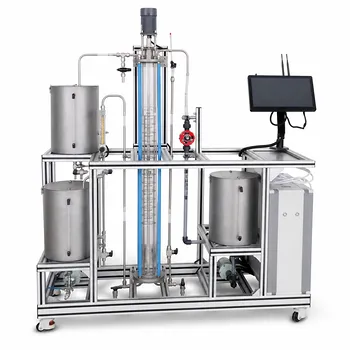
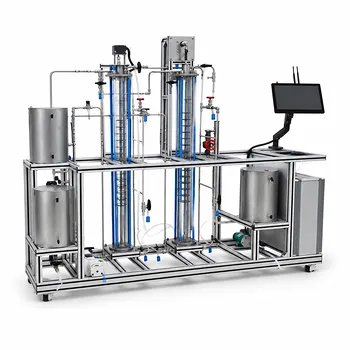
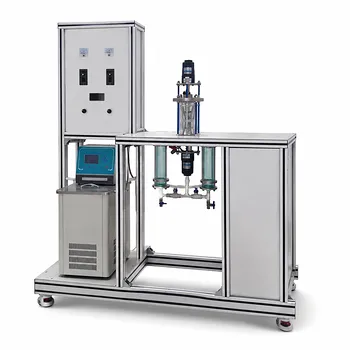
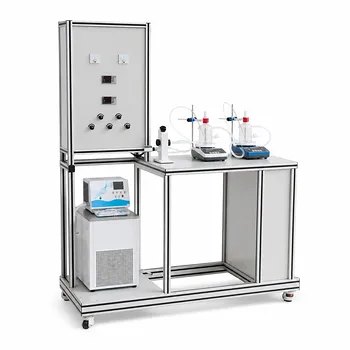
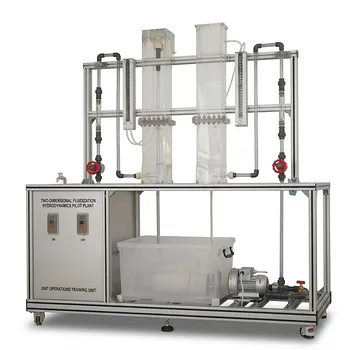
Жидкостные распределители — это не просто сантехническая арматура; это главный рычаг управления, определяющий, что студент может узнать на пилотной установке с насадочной колонной. Выбор распределителя напрямую диктует диапазон допустимых рабочих условий, типы жидкостей, которые можно безопасно изучать, и ясность демонстрируемой теории массопередачи. В то время как простое сопло может быть достаточным для узкого эксперимента с чистой водой, сложная конструкция типа «желоб-сито» открывает возможность безопасной демонстрации полного диапазона регулирования до 10:1, показывая студентам реальные пределы гидродинамики колонны.
Хотя насадочные колонны превосходят тарельчатые по эффективности при демонстрации непрерывной массопередачи, их производительность полностью зависит от начального распределения жидкости. В учебной пилотной установке выбор распределителя — это компромисс между простотой (сопло/труба), которая дешево подтверждает концепцию, и эксплуатационной гибкостью (желоб/перелив), которая позволяет студентам безопасно исследовать сложное поведение жидкостей, высокую вязкость и широкий диапазон расходов без немедленного сбоя.
Больше, чем распыление: Как конструкция распределителя определяет учебную программу
Фундаментальный недостаток упрощенных конструкций
В primary_reference установлена четкая иерархия производительности, подтвержденная физическими принципами потока. Наименее затратные варианты — сопловые и трубчатые распределители — страдают от критического образовательного недостатка: они легко засоряются и имеют структурные ограничения.
Сопловые распределители функционируют как точечный источник. Они пригодны только для колонн диаметром менее 600 мм, но их уязвимость к засорению делает их плохим выбором для общей учебной лаборатории, где чистота системы может варьироваться между группами студентов.
Трубчатые распределители offer low resistance to gas flow, a hydraulically sound feature. However, their low operating flexibility means that if a student significantly reduces the liquid feed rate, the distribution becomes uneven almost immediately. This turns a controlled experiment into an unpredictable one, severing the link between the student's input and the column's output.
Уровень точности: Механизмы желоба и перелива
To truly demonstrate the hydrodynamics outlined in the supplementary_references—particularly dynamic liquid holdup and surface renewal—the distributor must maintain integrity across a wide operating range.
Желобные распределители represent a significant step up in anti-clogging performance. This directly enables the use of fluids with higher viscosity or suspended solids, expanding the pilot plant’s capability beyond ideal water-air systems to more realistic, "dirty" industrial simulants.
The highest pedagogical value comes from trough-sieve distributors. By integrating liquid collection, distribution, and gas flow into a compact unit, they achieve an operational flexibility ratio of up to 10:1. This metric is vital. It allows a single piece of equipment to demonstrate the onset of flooding, the minimum wetting rate, and the efficiency plateau—all in a single lab session without swapping hardware.
Связь с удержанием: Распределенная реальность
The supplementary_references highlight a vital performance metric: liquid holdup.
Packed columns are chosen partly for their low liquid holdup (typically <6%), which enables rapid startup and stabilization. However, this benefit is nullified by poor distribution.
If a pipe distributor sends a heavy stream down one side of the packing (channeling), the local holdup in that zone will spike, restricting gas pathways and inducing premature flooding. The student sees a catastrophic pressure drop long before the theoretical limit, not because the packing is inadequate, but because the distributor failed. A high-quality trough or orifice distributor enforces the uniform initial distribution required to keep holdup consistent across the column's cross-section, ensuring the measured pressure drop correlates accurately with textbook predictions.
Критические контекстные факторы для производительности пилотной установки
Риск допущений о выравнивании и давлении
Operational flexibility is not just about flow rates; it's about physical setup. The supplementary_references stress that gravity-based distributors (including most trough and orifice types) must be perfectly horizontal.
In a teaching lab, a slight misalignment during installation creates a persistent, uneven flow pattern that no amount of valve adjustment can correct. For educational setups where precision installation tools may be limited, a pipe-type distributor distributor fed under constant pressure offers a "foolproof" alternative. It sacrifices range for setup reliability, ensuring that the fundamental principles of mass transfer are still observable even if the equipment isn't perfectly leveled.
Газовая сторона жидкостного распределения
A common pedagogical blind spot is ignoring the gas phase in liquid distributors. The supplementary_references clarify the distinction: Orifice distributors require dedicated gas risers; if these are too small, the column experiences a high gas pressure drop unrelated to the packing.
In contrast, weir-type distributors manage this more elegantly, using notches in the chimneys to pass liquid. This design inherently decouples the liquid flow path from the gas up-flow area, handling a significantly wider range of liquid flow rates without choking the gas. For a student calculating the overall column pressure drop, a weir-type distributor provides a clean signal, isolating the packing's contribution from the distributor's internal resistance.
Педагогический компромисс: Тарелка vs. Насадка
The distributor choice must be justified within the broader curriculum. Plate columns, as noted in the references, offer stage-wise contact and high built-in turndown flexibility without external precision distributors. A packed column equipped with a cheap nozzle will compare poorly to a plate column, not because packed technology is inferior, but because the liquid distribution is the intellectual bottleneck. To demonstrate the packed column's true advantage—superior continuous contact and lower pressure drop per theoretical stage—the pilot plant must employ a distributor (like the trough-sieve) that can defend the mass transfer kinetics by maintaining a uniform film across the packing surface.
Подбор распределителя под вашу учебную цель
The optimal liquid distributor depends entirely on which physical phenomena you intend to expose to the student.
- If your primary focus is demonstrating the basic equilibrium curve and mass transfer concept without complex fluids: A simple pressurized pipe distributor is acceptable. It minimizes installation errors and ensures a consistent, single-flow-rate experiment, keeping the focus on mass balance calculations.
- If your primary focus is exploring hydrodynamic limits, such as turndown ratio, flooding points, and weir loading: A weir-type or trough-sieve distributor is non-negotiable. Its 10:1 flexibility allows students to generate a full operational curve, visually observing the transition from efficient wetting to entrainment and flooding in real-time.
- If your primary focus is simulating industrial conditions with viscous or fouling services: You must select a trough-type distributor. The anti-clogging design prevents the experiment from ending prematurely due to blockages, allowing for the safe study of high-viscosity fluids and the associated impact on mass transfer coefficients.
The success of a packed column pilot plant does not rest on the height of its bed or the surface area of its packing, but on the intelligent distribution of liquid directly above that bed. Choosing the right distributor transforms the column from a tall, confusing pipe into a responsive, transparent instrument for chemical engineering truth.
Итоговая таблица:
| Тип распределителя | Диапазон регулирования / Гибкость | Ключевые преимущества | Лучший учебный сценарий |
|---|---|---|---|
| Сопло | Низкий | Низкая стоимость, простая конструкция | Малые колонны (<600 мм), испытания с чистой водой |
| Труба | Низкий | Низкое сопротивление газу, толерантен к наклону | Базовый материальный баланс, эксперименты с одним расходом |
| Желоб | Средний | Отличная защита от засорения | Вязкие жидкости, моделирование промышленности |
| Желоб-сито / Перелив | Высокий (До 10:1) | Разделяет потоки газа/жидкости, предотвращает каналообразование | Гидродинамические пределы, захлебывание, широкий диапазон расходов |
Обновите лабораторию химической технологии с LABPARK
Ready to provide your students and researchers with hands-on, industry-aligned learning? LABPARK designs and manufactures high-performance Educational and Vocational Unit Operations Pilot Plants tailored for universities, research institutes, and enterprises.
Whether you need advanced packed columns with precise trough-sieve distributors or comprehensive systems in chemical engineering, bioprocess & biotech, and environmental & water treatment, we deliver the reliability and flexibility your curriculum demands.
Свяжитесь с LABPARK сегодня to discuss your laboratory specifications and request a customized quote!
Связанные товары
- Учебная опытно-промышленная установка жидкостно-жидкостной экстракции с роторной дисковой колонной
- Комплексная пилотная установка жидкостно-жидкостной экстракции для инженерного образования
- Учебная пилотная установка для определения коэффициента массопередачи жидкость-жидкость
- Учебная пилотная установка для изучения трехкомпонентного жидкофазного равновесия
- Учебная пилотная установка для дозирования и управления потоком жидкости
Люди также спрашивают
- Как плотность и МПН влияют на пилотные установки жидкостной экстракции? Оптимизация работы колонны
- Как применяются тройные фазовые диаграммы и данные LLE в экспериментах по экстракции? Оптимизация масштабирования пилотной установки
- Как используется трёхкомпонентная фазовая диаграмма для определения расхода растворителя на опытно-промышленной установке жидкостной экстракции?
- Как коэффициенты селективности и распределения влияют на выбор растворителя для пилотной установки жидкостно-жидкостной экстракции?
- Как валидировать БВП для пилотных установок ЖРФ? Шагам по согласованию симуляций с реальностью